
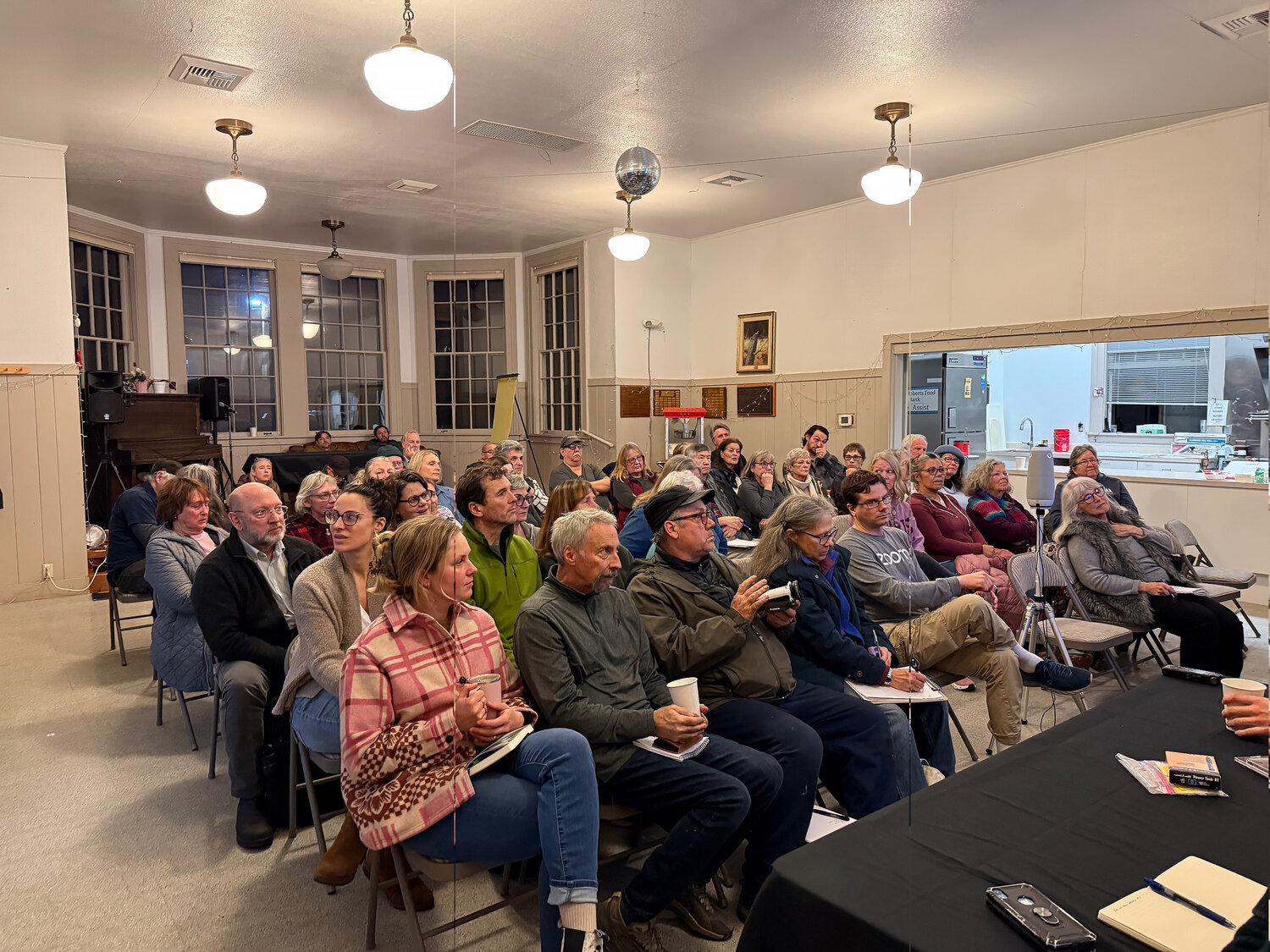
A rapt and engaged audience attended the first in-person outreach by Maul, Foster and Alonghi (MFA), a consulting company hired by the Port of Bellingham to create an economic development strategy for Point Roberts, which continues to be economically stressed from the aftermath of the COVID-19 pandemic and shut-down.
The town hall format meeting was held at the Gulf Road community center on February 20 and was well attended in person and remotely on Zoom. The evening began with a networking session which allowed community members to meet the project team. Subsequently, MFA team leader Seth Otto gave an overview of the night’s agenda and what people could expect. “A number of you have asked what it means to have a strategy. At the end of the day, we’ll be highlighting projects, policies, and proposals that are intended to build the economic base at Point Roberts and that should look like jobs. It should look like investment. It should look like new infrastructure,” he said.
“The objectives of this project, the Point Roberts economic development strategy, are to identify challenges and opportunities Point Robert, and then to make recommendations to strengthen the economic base. And we’ll be doing that by looking at priority projects for infrastructure development, incentivizing private development, and aligning these priorities with the community’s vision and with the available funding,” he continued.
“Much of what we’ve been doing for the last month, month and a half, is getting a good baseline understanding of what the conditions are in Point Roberts, and I want to acknowledge the work that’s been done historically by many of you in the room, and other folks that have already evaluated and identified many of the challenges and opportunities that this community faces,” he told the group.
Otto then described the demographics and other characteristics of the Point and how they impact on potential strategies to improve the economic environment.
For instance, he pointed out that most of the land is zoned for single-family residential, and there are almost no multi-family residential properties available, a huge issue for workforce development, attraction of workers, and retention of the younger working-age population.
Otto was followed by Sam Humphreys, who ran through the results of interviews held with residents, businesspeople, and other stakeholders by MFA. The group then broke up into small charrette groups to discuss the various opportunities and constraints discovered to date.
Following the breakout session, Otto described what would happen next. “The next phase will involve some more specific analysis of feasibility of different programs, projects, and investments, and we’ll report back to you when we have some preliminary results from that. This is a good stage in the process to provide input, to receive your feedback, and to understand your priorities and vision for the community,” he concluded.
A total of three community meetings are anticipated over the course of the study. The creation of an action plan will occur in the May-September 2025 time period.
According to MFA, the “plan is intended to be a road map for advancing all aspects of the strategy; it addresses funding and financing, permitting and regulations, key next steps, and timelines.”
A final report will be issued by September 2025 at the latest. The $89,000 study is being financed by the Washington State Department of Commerce and the Port of Bellingham.









Comments
No comments on this item Please log in to comment by clicking here